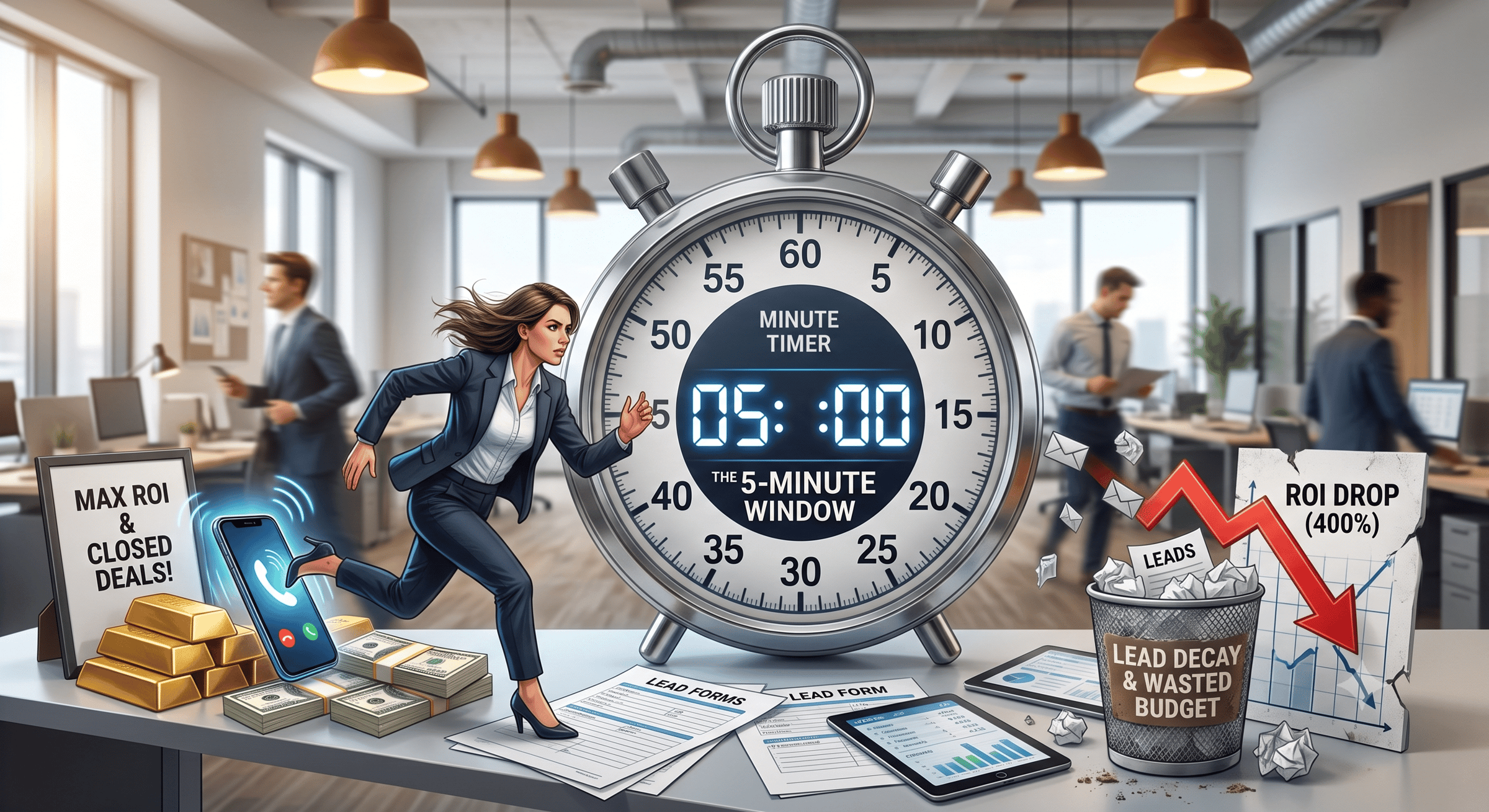

We hear it all the time. An agent buys a fresh batch of exclusive prospects, dials the list once, leaves a few generic voicemails, and throws their hands up in frustration. They quickly assume the list is a complete dud. Let’s be completely candid: if your sales strategy consists of a single phone call, the leads aren't bad. Your follow-up strategy is simply incomplete. To stop setting your marketing budget on fire, you must master the art of the omnichannel follow-up; insurance leads today expect and require a multi-touchpoint approach.
To convert modern insurance shoppers, you have to meet them where they are. Here is why adopting a multi-channel sequence is the only way to scale your agency and maximize your return on investment.
Table of Contents
The "One and Done" Delusion
Consumers today are constantly bombarded with spam risk calls, overflowing email inboxes, and endless mobile notifications. Expecting a prospect to drop everything they are doing to answer a call from an unknown number on the very first try is highly unrealistic.
Consider the harsh reality of modern sales statistics:
80% of sales require five or more follow-ups to successfully close.
44% of salespeople give up after exactly one follow-up attempt.
90% of text messages are read within the first three minutes of receipt.
If you are only using the phone to make contact, you are missing out on the prospects who prefer to text while sitting at their desk at work, or those who prefer to read educational emails on their own time before committing to a live conversation. The "one and done" phone call method is obsolete.
The Psychology Behind Multi-Touchpoint Marketing
Trust is not built instantly. When a consumer requests a quote online, they are expressing high intent, but they are also guarded. They know they are about to be pitched to.
By diversifying your communication methods, you lower their defense mechanisms. A text message feels less intrusive than a phone call. An educational email feels like a helpful resource rather than a high-pressure sales pitch. When you spread your communication across different platforms over multiple days, you establish authority, familiarity, and trust.
What is an Omnichannel Sequence?
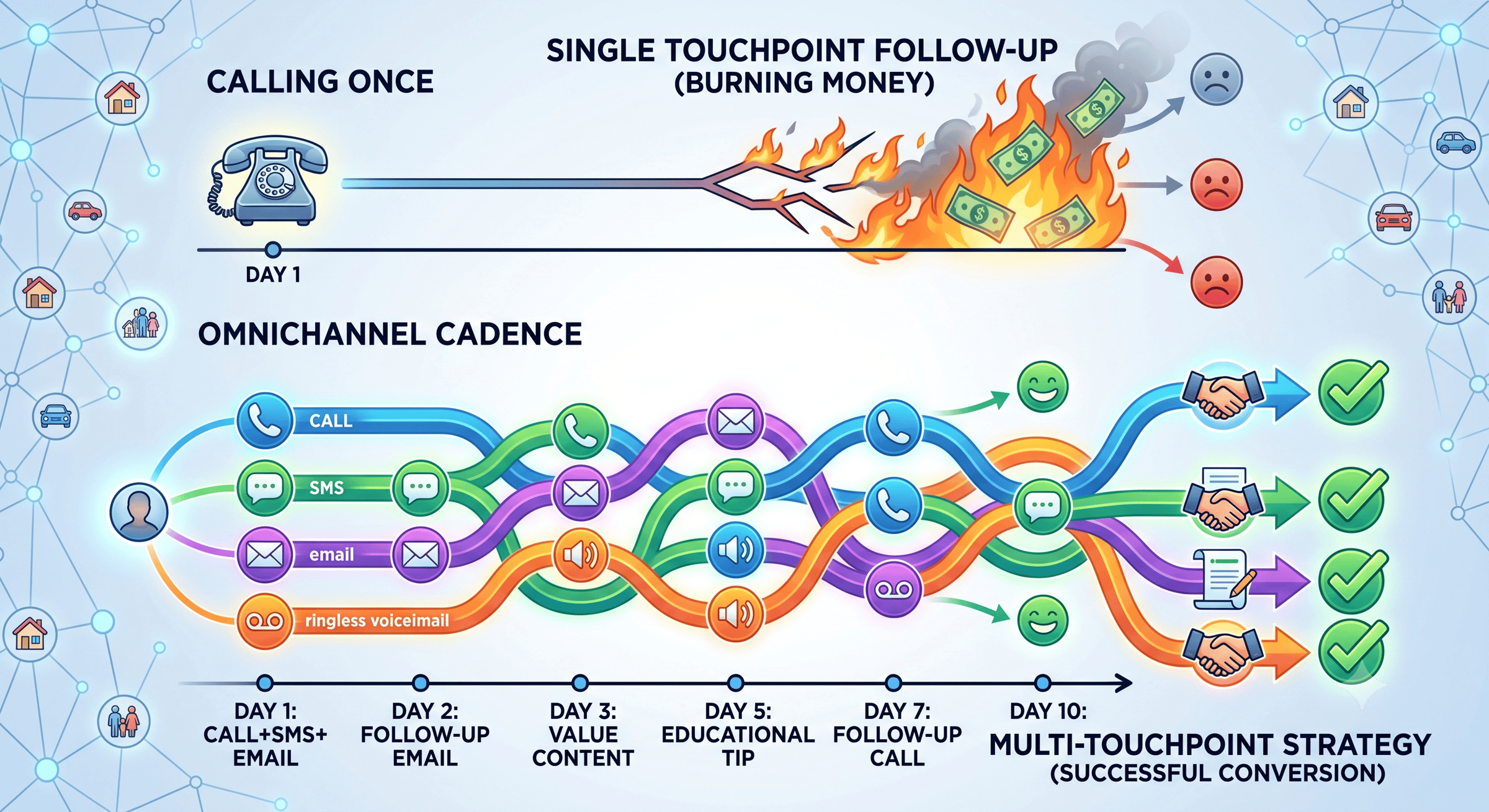
An omnichannel approach means utilizing multiple interconnected communication channels—such as phone calls, SMS text messages, emails, and ringless voicemails (RVMs)—to surround the prospect with value.
To build a successful omnichannel follow-up, insurance leads should be integrated into an automated CRM. Instead of being an annoying salesperson who keeps calling from the exact same number, you become an omnipresent, helpful advisor. You aren't just aggressively asking for their time; you are delivering bite-sized pieces of information across different platforms until they are ready to actively engage.
The Ideal 10-Day Follow-Up Cadence
To stop burning through your budget, you need a structured, automated system. When applying this 10-day omnichannel follow-up, insurance leads are guided seamlessly from cold prospects to booked appointments.
| Day | Action Item | Purpose |
| Day 1 | Call + SMS + Email | Hit the critical 5-minute window. Introduce yourself via text, and send a calendar booking link via email. |
| Day 2 | Ringless Voicemail + Email | Drop a non-intrusive RVM explaining you are reviewing their quote. Send an email with a quick educational tip about saving money. |
| Day 3 | Call + SMS | Mid-day check-in. A quick text asking: "Did you receive the estimate I sent over yesterday?" |
| Day 4 | Rest | Give the prospect a breather so you don't cross the line into spam territory. |
| Day 5 | Educational Email | Send a high-value email (e.g., "3 Common Mistakes People Make When Buying Insurance"). No hard sell, just pure value. |
| Day 7 | Call + SMS | Follow up on the educational email. Ask if they have any specific questions about their current coverage limits. |
| Day 10 | The "Break-Up" Message | Send a final text/email: "Hi [Name], I haven't heard back, so I'll close out your file for now. Let me know if you still need help!" This often triggers FOMO (Fear Of Missing Out). |
Frequently Asked Questions (FAQs)
What is a Ringless Voicemail (RVM)?
A ringless voicemail is a modern sales technology that allows you to drop a pre-recorded audio message directly into a prospect's voicemail inbox without their phone ever ringing. It is highly effective for delivering a personal touch without interrupting their day.
Isn't a 10-day cadence too aggressive?
There is a fine line between persistence and pestering, which is why the cadence is spread out over time and uses varied platforms. Providing educational value via email alongside your phone calls ensures you are viewed as a resource, not a nuisance.
What is the biggest mistake with omnichannel follow-up insurance leads campaigns?
The biggest mistake is a lack of automation. Attempting to manually track which day a lead is on and manually sending texts or emails is impossible at scale.
Do I have to do all this manually?
Absolutely not. A proper omnichannel strategy relies entirely on CRM automation. The emails, texts, and ringless voicemails should trigger automatically based on the lead's status, leaving you to focus solely on talking to engaged prospects on the phone.
Stop Chasing, Start Converting
Buying high-intent leads is only step one. Having the proper infrastructure to actually close them is step two.
At Best Price Leads, we don't just sell you a list of names and walk away. We partner with our agents to ensure they have the systems in place to achieve long-term success. By deploying a true omnichannel follow-up, insurance leads become highly profitable. You will finally stop wasting money on abandoned prospects and start dominating your local market.
Reach out to our sales team today to learn how we can help you integrate these exact automated systems into your agency's pipeline. Combine our premium data with your new follow-up cadence, and watch your agency's conversion rates skyrocket.